Water Softener: What It Is, How It Works, and Why It’s Worth It
Limescale is one of the most common enemies of plumbing systems. A water softener offers a definitive solution to this problem. If you’ve noticed white stains on faucets, dishes, glass, or reduced water pressure, the cause is likely hard water.
This system removes calcium and magnesium, improving water quality and protecting your home’s plumbing system.
Let’s explore how a water softener works, the benefits it provides, and when it makes sense to install one.
1. What Is Limescale and Why Is It a Problem?
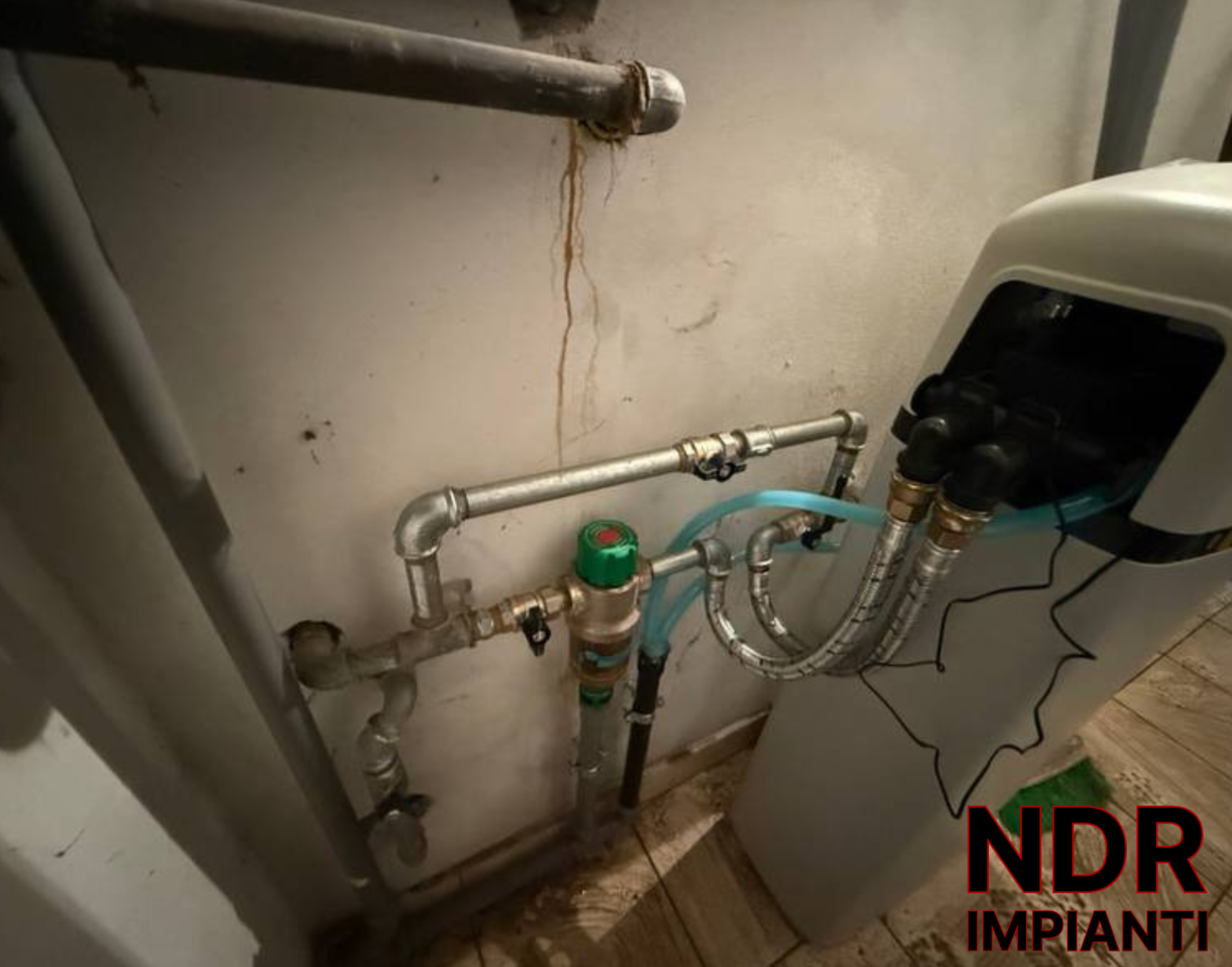
Hard water is rich in minerals, especially calcium (Ca) and magnesium (Mg). When heated or evaporated, these minerals precipitate as limescale, which causes damage to surfaces, appliances, and plumbing systems.
Main effects of hard water:
- Scale buildup in pipes and heating elements: reduces flow and increases wear.
- Higher energy bills: even 1 mm of scale can raise energy consumption by 15% for water heating.
- Shorter lifespan of appliances like dishwashers, washing machines, and water heaters.
- Stains and spots on dishes, glasses, windows, and faucets.
- Dry skin and dull hair: hard water is harsh on skin and hair.
2. How Does a Water Softener Work?
A water softener removes minerals that cause limescale through an ion exchange process. It replaces calcium and magnesium ions with sodium ions, making the water “softer.”
Softening process:
- Water enters a tank filled with ion exchange resins.
- The resins capture calcium and magnesium, releasing sodium in exchange.
- Water exits the system free of scale-forming minerals.
- The system periodically regenerates using a salt solution to restore the resins’ efficiency.
3. Benefits of Installing a Water Softener
Installing a water softener offers both economic and quality-of-life benefits:
- ✅ Protects your plumbing system: prevents scale in pipes and boilers.
- ✅ Longer lifespan for appliances: fewer breakdowns and less maintenance.
- ✅ Energy savings: less scale = better thermal efficiency.
- ✅ Improved water quality: no more spots or residue on surfaces and dishes.
- ✅ Less detergent needed: soft water enhances the effectiveness of soaps and shampoos.
- ✅ Healthier skin and hair: less dryness and irritation.
4. How to Choose the Right Water Softener
When selecting the best water softener, consider these factors:
– Capacity and Size
They depend on:
- Daily water usage
- Local water hardness
A typical household system requires about 20–30 liters of resin.
– Types of Water Softener Regeneration
| Type | Description | Pros |
|---|---|---|
| Timed | Regenerates at fixed intervals | Easy to manage |
| Metered | Regenerates only when needed, based on usage | More efficient, uses less salt |
– Maintenance and Operating Costs
- Requires periodic addition of salt for regeneration.
- Choose models with low consumption and easy maintenance.
5. Frequently Asked Questions (FAQ)
- ❓ Is softened water drinkable?
Yes, but it contains more sodium. If you follow a low-sodium diet, you can install a separate faucet for unsoftened water. - ❓ How long does a softener last?
With proper maintenance, it can last 10 to 15 years. - ❓ Where is it installed?
Usually at the main water entry point, near the meter or in the utility room. - ❓ Does it require maintenance?
Yes, but minimal: check the salt level regularly, clean the system, and replace the resin every 10–12 years.
6. Water Softener vs. Polyphosphate Doser: Which to Choose?
If you’re unsure which solution is best for limescale treatment, here’s a comparison table:
| Feature | Water Softener | Polyphosphate Doser |
|---|---|---|
| Limescale Action | Removes Ca and Mg | Prevents precipitation only |
| Water Treatment | Complete (soft water) | Anti-scale only |
| Suitable for Entire Home | Yes | No, boiler only |
| Maintenance | Low | Very low |
| Initial Cost | Medium/High | Low |
7. Conclusion
A water softener is a smart investment for those living in areas with hard water. It protects plumbing and appliances, improves water quality, and lowers maintenance, energy, and detergent costs.
It is especially recommended if you:
- Notice limescale stains on surfaces and dishes.
- Have a boiler that clogs or uses too much energy.
- Want to save money on cleaning products and repairs.
- Live in an area with high water hardness.
To learn more about properly sizing a softener based on water consumption and hardness, check out our dedicated guide on softener sizing.
